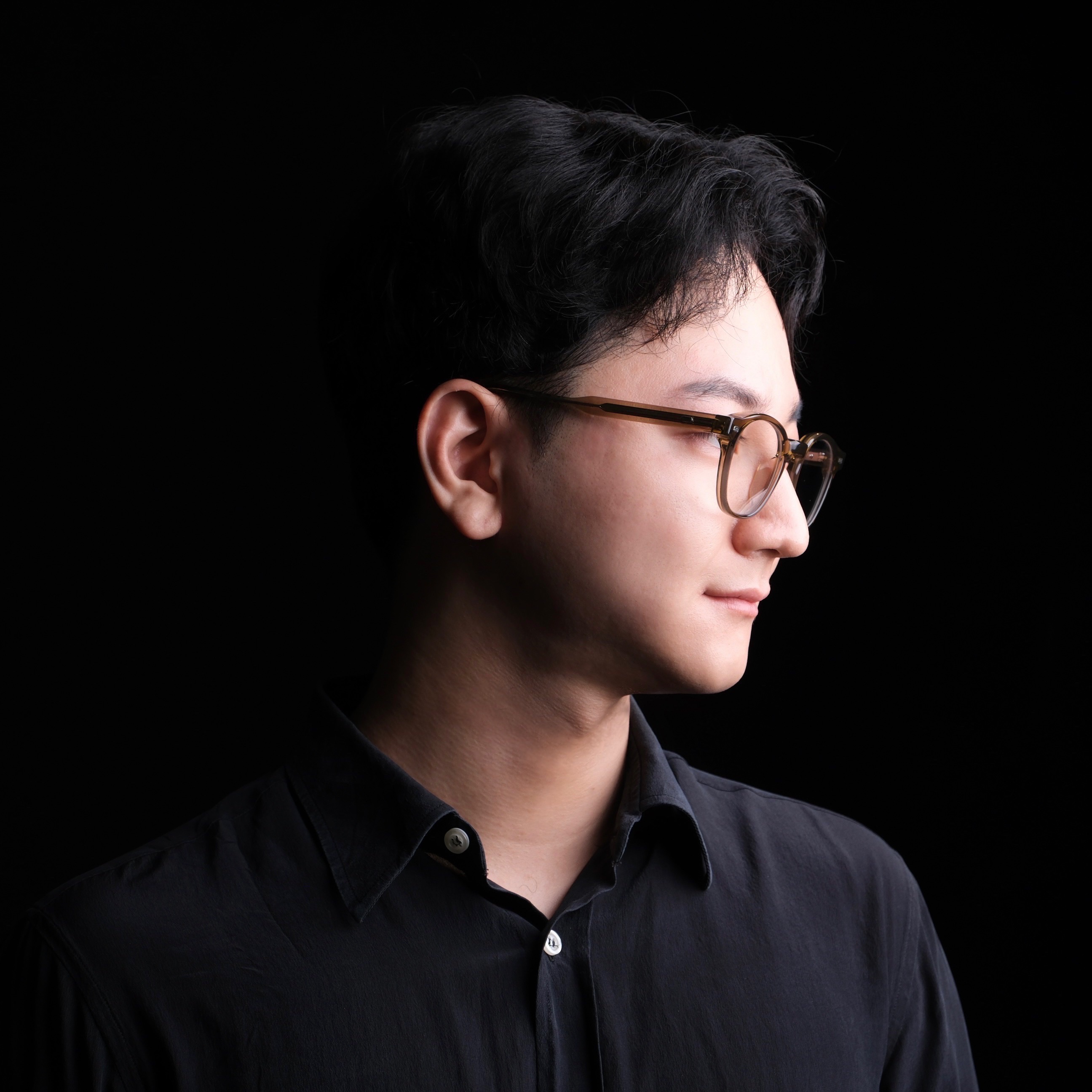
Seungjun Lee
Email | Google Scholar | GitHub | LinkedIn
I am a Research Scientist specializing in Healthcare AI. My expertise lies in Anomaly Detection, Deep Generative Models, and Multi-modal Foundation Models, with a proven track record of translating theoretical research into regulatory-grade medical solutions.
Currently at VUNO Inc., I spearhead the development of neuroimaging diagnostics, focusing on modality-specific adaptation. Previously at MakinaRocks, I engineered production-level MLOps pipelines, optimizing latency for industrial deployment. My research has been published in top-tier journals, including Nature Communications, and recognized with the Pfizer Medical Research Award.
I am committed to building life-saving AI systems by combining rigorous clinical validation with robust software engineering.
Professional Experience
Research Scientist / Engineer | VUNO Inc. March 2024 – Present
- Spearheading the development of end-to-end deep learning pipelines for neuroimaging diagnostics using PyTorch, focusing on model robustness and clinical validation.
- Researching modality-specific adaptation of multimodal foundation models for clinical screening.
Machine Learning Engineer | MakinaRocks June 2022 – March 2024
- Engineered production-grade MLOps pipelines for anomaly detection, reducing model inference latency and ensuring scalable deployment in industrial environments.
- Built and optimized ML models (Python/C++) for real-time industrial process monitoring, achieving significant performance improvements in production systems.
Medical AI Researcher | Asan Medical Center March 2020 – June 2022
- Led research on generative models for emergency diagnostic triage, resulting in a technology transfer to Coreline Soft Co., Ltd.
- Validated AI models in clinical settings, bridging engineering solutions with medical requirements.
Education
M.S. in Biomedical Engineering | University of Ulsan College of Medicine (Asan Medical Center) 2020 – 2022 | Advisor: Prof. Namkug Kim
- Thesis: Emergency Triage of Brain Computed Tomography via Anomaly Detection with a Deep Generative Model
B.S. in Naval Architecture and Ocean Engineering | Seoul National University 2015 – 2020
- Minor in Mechanical Engineering
Selected Publications
Automated Idiopathic Normal Pressure Hydrocephalus Diagnosis via Artificial Intelligence–Based 3D T1 MRI Volumetric Analysis (2025). American Journal of Neuroradiology. J. Lee, D. Kim, C.H. Suh, S. Lee, et al. Paper
Emergency Triage of Brain Computed Tomography via Anomaly Detection with a Deep Generative Model S. Lee1st, B. Jeong, M. Kim, et al. Nature Communications, 2022. Paper | Code
- Impact: Selected for Technology Transfer to Coreline Soft Co., Ltd.
- Recognition: Awarded the 21st Pfizer Medical Research Award.
Enhancement of Evaluating Flatfoot on a Weight-Bearing Lateral Radiograph of the Foot with U-Net Based Semantic Segmentation on the Long Axis of Tarsal and Metatarsal Bones (2022). Computers in Biology and Medicine. S.M. Ryu, K. Shin, S.W. Shin, S. Lee, N. Kim. Paper
Enhancing Deep Learning Based Classifiers with Inpainting Anatomical Side Markers (L/R Markers) for Multi-Center Trials (2022). Computer Methods and Programs in Biomedicine. K.D. Kim, K. Cho, M. Kim, K.H. Lee, S. Lee, S.M. Lee, K.H. Lee, N. Kim. Paper
Deep Learning on Radar-Centric 3D Object Detection (2020). arXiv preprint arXiv:2003.00851. S. Lee1st. Paper
Conferences
Unremarkable Brain CT Screening via Modality-Specific Adaptation of a Multimodal Foundation Model: A Retrospective Clinical Simulation Study (2025). Radiological Society of North America (RSNA). Poster Presentation. December 2025, Chicago, IL, United States.
Predicting Amyloid Burden Using a Masked Multimodal-Multitask Deep Learning Framework with Latent Diffusion-based Synthetic PET (2025). Alzheimer’s Association International Conference (AAIC). July 2025. Link
Predicting Amyloid Burden Without PET Scans: A Multimodal Attention-Based Deep Learning Approach (2025). AD/PD™ 2025 Alzheimer’s & Parkinson’s Diseases Conference. On-Demand Oral Presentation, Poster Presentation. April 2025, Vienna, Austria.
3D Medical Image Synthesis of Brain Computed Tomography via a Conditional Generative Adversarial Network (2022). Asian Oceanian Congress of Radiology & Korean Society of Radiology. Poster Presentation. September 2022, Seoul, Republic of Korea.
Interpretable Identification of Various Diseases in the Emergency Brain CTs Using Anomaly Detection with a Deep Neural Network Trained Only with Normal Brain CTs (2021). Korean Society of Radiology. Oral Presentation. September 2021, Seoul, Republic of Korea.
Interpretable Identification of Various Diseases in the Emergency Brain CTs Using Anomaly Detection with a Deep Neural Network Trained Only with Normal Brain CTs (2021). Radiological Society of North America (RSNA). Oral Presentation. December 2021, Chicago, IL, United States. Interview
Unsupervised Anomaly Detection on Brain CT with a Style-Based Generative Adversarial Network (2020). Korean Society of Artificial Intelligence in Medicine (KoSAIM). Oral Presentation, Best Presentation Award. August 2020, Seoul, Republic of Korea.
Invited Talks
| Emergency Triage of Brain Computed Tomography via Anomaly Detection with a Deep Generative Model (2022). 한국을 빛내는 사람들 (한빛사), Biological Research Information Center (BRIC). Webinar, Interview. October 2022, Online. Video | Interview |
Honors & Awards
- 21st Pfizer Medical Research Award (2022)
- Best Presentation Award, Korean Society of Artificial Intelligence in Medicine (2020)
- Minister of Trade, Industry and Energy Award, Creative Comprehensive Design Competition (2018)
- Grand Prize, 7th Creative Design Festival, Seoul National University (2018)
Patents
- Method of Detecting Anomaly Region in Medical Image KR Patent 10-2022-0103852 | Issued July 2022